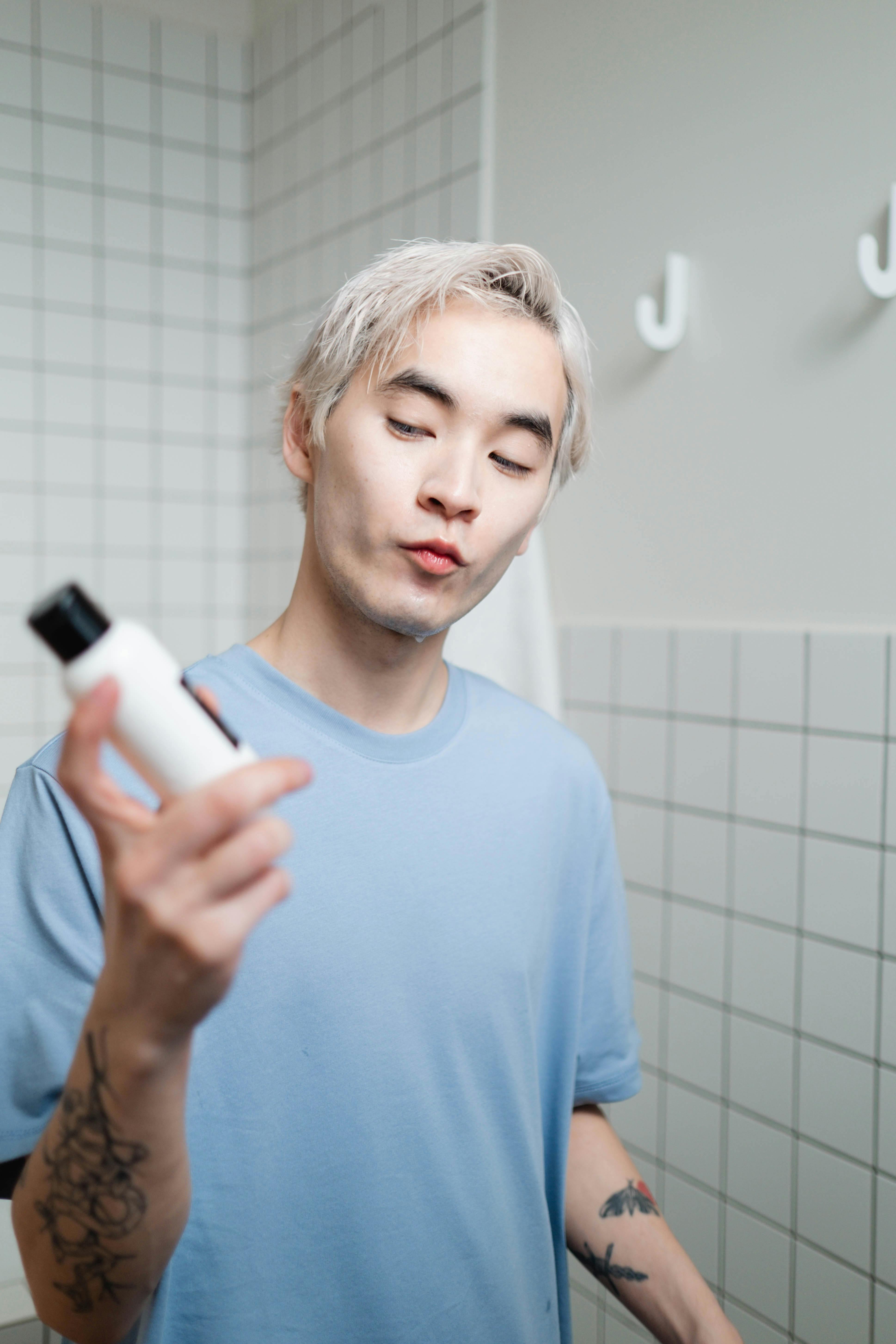
Korea has the highest per-capita skincare expenditure among men of any country. This is not a cultural curiosity — it reflects a population that has applied consistent skincare practice over decades and observed the outcomes. Korean men in their 40s and 50s demonstrably appear younger than their Western counterparts, and the mechanism is not genetic. It is systematic, daily skin maintenance beginning in the twenties.
The biological case for male skincare
#1
Korea — global ranking for men's skincare spend per capita
~20%
Thicker dermis in men vs women — higher collagen density initially
80%
Of visible skin aging attributable to UV exposure — not biological aging
Male skin has structural differences from female skin that are relevant to product selection. The dermis is approximately 20% thicker on average, with higher baseline collagen density — a biological advantage that delays the visible appearance of structural aging. However, male skin also produces significantly more sebum (androgen-driven), is more prone to enlarged pores and congestion, and is subject to the repetitive mechanical trauma of daily shaving which chronically disrupts barrier integrity.
Higher sebum production
Androgenic sebum stimulation means male skin requires non-comedogenic formulations and regular exfoliation to prevent congestion and enlarged pore appearance.
Shaving-induced barrier disruption
Daily shaving removes the stratum corneum surface and mechanically disrupts the barrier. Post-shave barrier repair is a functional requirement, not an aesthetic luxury.
Later but steeper aging curve
Higher collagen density delays visible aging, but when collagen loss begins it can progress rapidly. The preventive window is the same as for female skin: twenties and thirties.
Greater UV exposure
Statistical data consistently shows men apply SPF less frequently and at lower quantities than women. The skin aging gap between Korean men (who apply SPF) and Western men (who typically do not) is primarily attributable to this single variable.
The most significant determinant of skin quality at 50 is not genetics, not product spend, and not the complexity of the routine. It is whether the individual applied a correctly formulated SPF daily from their twenties onward. This is the entire Korean male skincare story in one sentence.
The four-step protocol
Male skin's higher sebum production makes thorough cleansing more consequential than for drier skin types. An oil cleanser dissolves the day's sunscreen, pollution, and excess sebum; the subsequent water-based cleanser resets pH and removes residual oil. In the morning, a single gentle cleanser is sufficient — double cleansing on a low-sebum morning risks over-stripping the barrier before the day's products are applied. For shaving days, cleanse after shaving and before serum application.
Key: Ma:nyo Pure Cleansing Oil + gentle foam cleanser
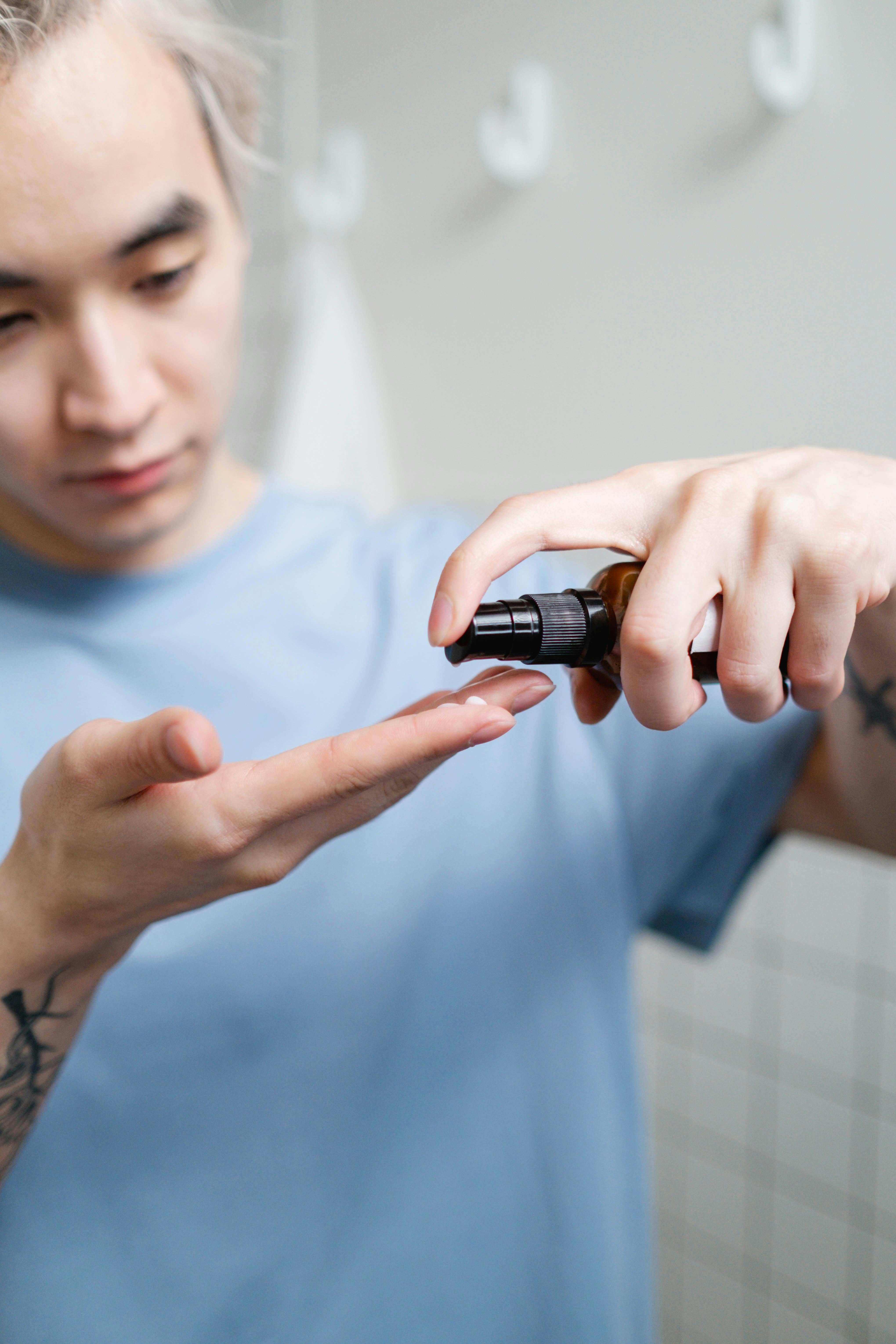
A multi-weight hyaluronic acid serum is the highest-value addition to a minimal routine. Applied to damp skin, it creates the moisture foundation that prevents the surface dehydration that exacerbates fine lines and dull texture. For sebum-prone skin, a lightweight HA serum is preferable to a rich cream as the primary hydration vehicle — it delivers hydration without contributing to congestion. Three to four drops, applied directly to the face and pressed in with fingertips, not rubbed.
Key: Torriden Dive-In HA Serum — water-light texture, absorbs in seconds
This step delivers the primary clinical outcome: collagen repair, pore minimisation, and barrier restoration. PDRN (polynucleotide) — originally a clinical injectable — stimulates collagen synthesis and cellular repair when applied topically. For male skin, it addresses both the post-shave barrier disruption that occurs daily and the cumulative structural changes of aging. Niacinamide at clinical concentrations (5–10%) simultaneously controls sebum, minimises pore appearance, and inhibits hyperpigmentation. Both are available as lightweight moisturisers appropriate for male skin texture preferences.
Key: Medicube PDRN Moisturiser — collagen repair in a non-greasy texture
The entire Korean male skincare advantage relative to Western male skincare is attributable almost entirely to this step. Korean men apply sunscreen. Western men generally do not. The cumulative UV damage that occurs without daily SPF — collagen degradation, hyperpigmentation, structural aging — begins in the twenties and compounds exponentially over decades. The formulation barrier has been the primary obstacle: Korean SPF formulas use newer UV filter chemistry that is invisible on skin and leaves no residue, making consistent daily application practically achievable in a way that heavy Western SPF formulas are not.
Key: d'alba Waterfull Tone-Up Sunscreen — applies like water, no white cast

Complete protocol
Four steps. Every day.
AMGentle cleanser → HA serum → PDRN or niacinamide moisturiser → SPF 50+ PA++++
PMOil cleanse → foam cleanse → HA serum → PDRN moisturiser
TotalUnder 4 minutes morning and evening combined
ResultMeasurably different skin quality at 90 days; compounding improvement over years
The Korean male skincare model demonstrates that results do not require complexity. They require consistency, correct product selection for the skin's actual biology, and the discipline to apply SPF every single morning. The four steps above represent the protocol Korean dermatologists would prescribe for any man starting from zero — regardless of age, skin type, or previous skincare experience.